


By Sensei Paulo Vitor Cabral Monteiro
A moment of silence to bring body, breath and attention together.
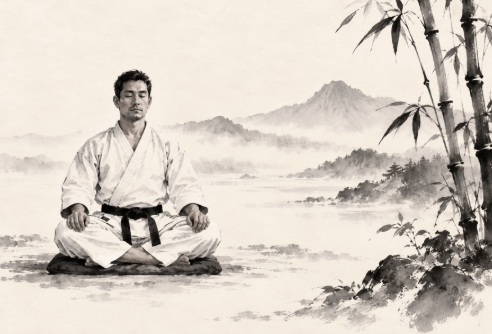
- Sit comfortably and steadily
Choose a comfortable position: on the floor with support, or in a chair with your feet
firmly supported. Keep your spine upright, respecting its natural curves without
stiffness. Relax your shoulders, jaw and hands. This posture allows the chest and
abdomen to move freely with the breath, preventing tension or compression from
restricting breathing movements. - Notice each breath
Follow the air as it flows in and out, noticing where the breath is most apparent: at the
nostrils or in the movement of the chest and abdomen. Observe the beginning,
unfolding and end of each cycle without trying to change it. The breath serves as an
anchor to which your attention can return. - Allow the natural rhythm
Do not seek a particular breathing pattern or force deep breaths. Do not hold your
breath or impose a count. Allow the body to breathe at its own pace; as the practice
unfolds, breathing may settle naturally. If this does not happen immediately, keep
observing without demanding a result. - Let thoughts and sensations pass
Imagine yourself as a spectator watching a film. Thoughts, memories, emotions and
sensations appear like scenes and run their course. Notice their presence without
judging them, pushing them away or following their stories. You do not need to empty
the mind. When you notice that your attention has wandered, acknowledge it and
gently return to the breath and body. - Remain in the here and now
Bring mindful attention to the experience of this moment: the air flowing in and out,
the contact between your body and its support, the position of your spine and the
sensations present. The breath is the main point of focus, accompanied by awareness
of the body. Whenever your attention wanders, return. This return is part of the
practice. - Begin and end martial practice
Mokuso is fundamental to establishing a clear and tranquil mind at the beginning and
end of martial practice. Before training, it helps gather attention and prepare an
attitude of presence. At the end, it offers a moment to notice the state of body and
mind and bring the activity to a serene close. Carry this quality of attention into your
movements, study and interactions in the dojo.
A simple guide
Sit comfortably. Notice your body and breath. Let the scenes of the mind pass. Return to
the present. To finish, expand your awareness to your surroundings and resume moving
calmly.