

Home Blog Page 17

Hard and Soft

Let’s be very scientific and logical regarding our understanding of the differences between our “hard” and “soft” training. There are distinct differences, and it’s about time all our Uechi-Ryu practitioners follow science rather than a religion like “blind belief.” I hear many references to the soft aspect of training: breathing, spiritual, soul refinement, meditation, and a host of philosophical, non-sensible bedtime stories.

Why can’t soft Uechi-Ryu be just that? Why can’t we just understand that there are hard ways of delivering effective movements and a similar soft way of doing the same? Why can’t we differentiate between what movements are soft and what movements are hard? It is so simple to see and as clear as night and day.

After all these years of training in a system originally called “hard and soft,” most of us look like Neanderthals beating each other on the head with clubs. Even they look more educated in soft as their swing looks less rigid than most of our katas. I’ve heard people say, “the harder and more rigid you are, the better your kata.” Are you kidding me? How do you fight while being that rigid?

One of the most ridiculous things I’ve heard is kata is kata and not fighting. If our kata is not fighting, why do we practice kata? Isn’t karate a fighting art? Does kata not teach us the techniques within our style and how to use them? If katas are not actual fighting techniques, why are we trying to develop muscle memories we can’t use while fighting?

I’m also told our movements in kata are neutral movements providing options to be used in many different ways as needed if we are engaged in fighting. That says to me, these people are not fighters and haven’t practiced a lot of fighting. Please realize fighting is not methodical, and each step is planned. Let’s not confuse actual fighting with yakasuko, where every attack and defensive reaction are orchestrated. Fighting is instinctual and reactional. Your expected scenarios will change in a nanosecond, and you’ll have no idea what to do except getting ice for your black eye and paper towels for your bloody nose.

If you need to think about what to do when someone is attacking you, consider yourself beaten. When someone is throwing a punch or a kick, and you are there scratching your head deciding what to do from your neutral muscle memories, you don’t belong in that situation. If you need to think about what to do every time you have an altercation, you must get beaten up a lot.

In a real scrimmage, you need to stay fluid. Allow yourself the ability to attack at every opportunity quickly or to softly and quickly step out of reach of your attacker if necessary. That is some of the most important aspects of being soft, speed and agility.

Please do not misunderstand the value I place in soft to discredit the hard aspect of martial arts. Regardless of how soft we want to be, there will always be a presence and a degree of hardness in everything we do. Just as when we try to remain as hard as a rock, we need to soften a little just to move. Has anyone ever seen a statue throw a punch? The majority of us perform our katas as if we are statues.

Let’s get to the more scientific idea of hard and soft movements. The entire study of karate as a science is to understand how our body will generate the greatest and most effective force during combat. As we’ve learned in grade school, force is mass times acceleration (F = m x a). A more complicated formula

Is FNet = Fa + Fg + Ff + FN. Net force is when a body is in motion and other forces are involved like gravitational force Fg, frictional force Ff, and the normal force. This applies to both hard and soft techniques.

Let’s first discuss the use of hard, which we all prescribe. Hard techniques require more mass. It is the mass behind our projected weapons, be it our hands, our feet, or whatever we choose to use to hit. That is why linear (straight motions) are usually hard techniques. The less circular our movements, the more we can retain our body’s mass behind the strike.

Remember FN, which is normal force, can only be obtained by allowing ourselves a certain degree of softness to accelerate our weapons to achieve maximum force. Retaining your extreme tightness can only slow your acceleration which reduces your ability for maximized force. Please be mindful your mass is constant. To maximize force, your only option is to loosen up and increase your acceleration.

I would also like to mention another teaching we’ve received that doesn’t make much sense. This idea that our body needs to be perfectly square to the front as we punch, kick, and block. What are the benefits of that? What do we gain if our body is not engaged as a part of our entire fighting machine? How do we develop muscle memory elements like timing, balancing, anchoring, speed, and fluency if all aspects are not engaged together?

The benefits of a rotation are so overwhelmingly obvious to a student who follows science with an open mind. Most important of all, this rotation allows the inclusion of our mass to be injected into the force of the attack. This rotation also allows us to retain our upright posture as we strike. Has anyone noticed our current Uechi-Ryu students performing kata and demonstrating this slight body bounce and leaning in the direction of their strike? Take a close look. You’ll see many of our masters rank still doing that. There is little mass being used, and we are leaning forwards off balance. Is that good karate? Is this what we are teaching our students? Do you really believe this training is better than a slight rotation, including more mass for power, more speed for power, and better balance?

I will now address my understanding of our soft aspect of Uechi-Ryu. The power of soft in China is referred to as “ging.” Ging is the force you are delivering while hitting soft and quick. That is the entire premise of Yang Tai-Chi. If we hit someone with a stick, we will leave a bruise. If we tie a rock on a soft rope and spin that rock in a circular motion and contact our opponent, we will break his skin, causing much external and internal damage. That is only one example of softness.

While engaged in a fight, and we remain hard and unmoved, getting hit due to our lack of movement or our inability to move, neither one walks away unscathed. We are conditioned on getting hit, so we can say, “this didn’t hurt.” Maybe mentally you’ve conditioned yourself to believe you can take this bruising. However, your body, with its black and blues marks, says differently. You’re still bleeding internally, and that is never “good.” If you’ve developed an understanding and use of being soft and fast, you may be able to avoid much of these damaging contacts.

Soft movements are more sophisticated and skillful, as it requires timing and positioning. As soft techniques use less mass, they will require more speed. We need to determine which Uechi-Ryu movements have less mass support. I would suggest we consider our circular movements. Circular movements (like that rock on a string) comes around quicker and have a better chance of hitting their mark. Remember, speed is what gives soft techniques its force; we need to soften up to generate more speed.

While I work with people during kata, I’ve always asked everyone to feel their movements and feel the power they can generate with their movements. That is how you can understand and learn how to work with your body to gain strength and speed in your movements. Your body needs to connect with every moving part and feel the flow and the ease of movement. If your body moves rigidly and not working cohesively together, you are restricting and fighting yourself. You’ll never reach or recognize your full potential.

When and if we become masters, what are we mastering? Are we mastering the movements? After 11 to 15 years of training, we should have learned every movement and technique in the system. Why is there such importance in “time in grade”?

Time in Grade offers us the development of our minds and bodies to the many movements and options to the many techniques we’ve learned these formative years. The time in training during each of the master ranks helps develop and heighten our physical and mental attachment to our movements. Every one of our movements, while continuously training, becomes more uniquely part of who we are.

Those who rush to promotion and speedy advancements only demonstrate their lack of interest in the honor and respect for the arts. It certainly detracts from their mind, body, and spirit.

How are we masters of an art rooted in understanding “HARD” and “SOFT” when all anyone sees is hard?

by Darin Yee

A Message from Germany

The IUKF was excited to receive a message from Sensei Paul Kronschnabl, a Renshi Rokudan from Germany. We have shared his message below:

We are proud to share with the IUKF community that we have been back in my dojos, Regensburg and Pettendorf, for three weeks after the lockdown was released.

After a month without contact, it is not as smooth as it should be, and we certainly need more practice in sparring and grappling. Fortunately, everything is going well so far, and I am incredibly pleased that no one quit in the lockdown time.

The sensei of a Shorin Ryu Seibukan Karate Dojo asked for a workout with my students and me, so his students can learn something about Uechi-Ryu. I am so happy that we can work out together in a couple of weeks and learn from each other. I am personally excited to learn some block techniques and Karate-ka that I do not yet know.

We look forward to what the future will continue to bring to us and the Uechi-Ryu community!

Regards
Paul

FREE Autographed Copy of the Black Belt Test Guide Available

0

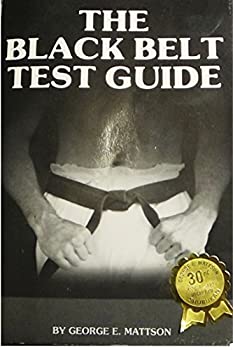
We are excited to announce that the IUKF will provide the Shihans (head instructors) of all IUKF-member dojos in good standing with an autographed copy of the Black Belt Test Guide by Sensei George Mattson as a gift from the organization. 

The Black Belt Test Guide

We would like to note that while the IUKF will continue to use the Black Belt Test Guide, but there are some concepts that may require updating and further clarification.  Among those issues include time in grade. Any updates on the IUKF website will supersede the published paperback Black Belt Test Guide.

For IUKF member-dojos, to request your autographed copy, please email: ian@eastbaykarate-do.com

Additional copies can be purchased for $30 (includes shipping & handling).  Email: ian@eastbaykarate-do.com

We will send you a PayPal link for payment.

A Message from IUKF President on Rank Requirements

0

Dear IUKF Practitioners,

I want to state that everyone has a “letter of the law” to follow. However, honorable people live by the “spirit of the law.” I understand some of the writings can be ambiguous, allowing those who’ll manipulate the system to find alternative translations. 

Trying not to be too ostentatious, the IUKF will not accept anything less than “the spirit” in connection with Sensei Mattson’s writings.  

I am defining the meaning of several phrases found in Sensei Mattson’s Black Belt Test Guild. Please be informed the IUKF will consider all factors in regards to our master rank promotions.

Found in the RANK REQUIREMENT SUMMARY CHART

Years in Grade:

This phrase does not mean simple chronological passing years. The spirit of this term means years of honest, continuous, consistent, dedicated workouts.

We advance in grade due to the maturity and continuous improvement of our art through training on the dojo floor.    

The IUKF is now informing everyone, the phrase “years in grade” will be defined as “years in grade training.” All training must be verified by the “home dojo” and applications for advancements must be received from the Shihan of your dojo. If you do not have a home dojo, please contact me, and I will help offer you suggestions.

Minimum Years and Average Years:

Sensei Mattson’s suggested time in training is for Senseis to follow. This does not mean you can quit training and show up with the recommended time looking for a promotion. That is the primary reason the IUKF no longer accepts applications from ronans. All applications must come from an IUKF dojo in good standing.

The IUKF also suggests dojos and Shihans understand and consider why Sensei George Mattson published the “minimum time and average time.”  

Students who come to class 3 to 5 times a week exhibit an exceptional desire to learn and excel in the art. For example, this student will accumulate over 150 workouts in 1 year or 750 workouts in the 5-year minimum time frame. 

Students attending classes 2 times a week would be considered “average.” Calculating 50 weeks in a lunar year, 2 workouts a week would equate to 100 workouts credited to each year. If we multiply these 100 workouts a year, times 5 years, we would only total 500 workouts. Hardly seem fair or acceptable in comparison to 750 from exceptional students, does it?

The IUKF’s position on these minimum and average years will include suggested workouts. All relevant years must consist of 100 adequate workouts each year. For example, an average student at 2 times a week will accumulate 100 workout hours in 1 workout year. Therefore, the sensei should recommend this student for advancement with not only the suggested years but verify the workout hours.    

Please note the IUKF will maintain respect for our honored ranking system and request all dojos to follow these guidelines as published in Sensei Mattson’s Black Belt Test Guild. Ranking should not be a self-serving right but an honor bestowed to you by your peers to recognize your effort and accomplishments.    

Also, note there are financial advantages in honoring the IUKF guild lines along with presenting a more mature student. 

Thank you for your understanding and respect for your art.

Darin Yee

President-IUKF 

A Message from IUKF President on Free Virtual Classes

2
Virtual classes

A healthy hello to all our IUKF members, dojos, and Uechi-Ryu students. I thank you for your dedication to the advancement of Uechi-Ryu during these trying times and your commitment to a respectable organization where we can all be proud to wear an IUKF black belt.

As a supportive organization, the IUKF has been running an online workout for all our Uechi-Ryu communities for many months now. People from all over the world are gathering twice a week to perform and practice their katas to keep them fresh in our minds. This way, when this pandemic is over, we can all return to our respective dojos without missing a step.

The IUKF is here for all Uechi-Ryu practitioners, so there are absolutely no charges nor demands. We simply meet together online to enjoy each other’s company while staying healthy and maintaining our Uechi-Ryu training. Please contact me, and I will add you on to my list of people to send workout information.

Also, be informed, the IUKF Senior Board, in recognition of the financial difficulties we now face, has determined to return all dojo contributions. After we’ve made final assessments of which contributions are from dojos and not promotion applications. I will send a check in the amount you’ve paid and mail it to you.

Thank you for being loyal IUKF members and faithful Uechi-Ryu practitioners.

Darin Yee
President – IUKF